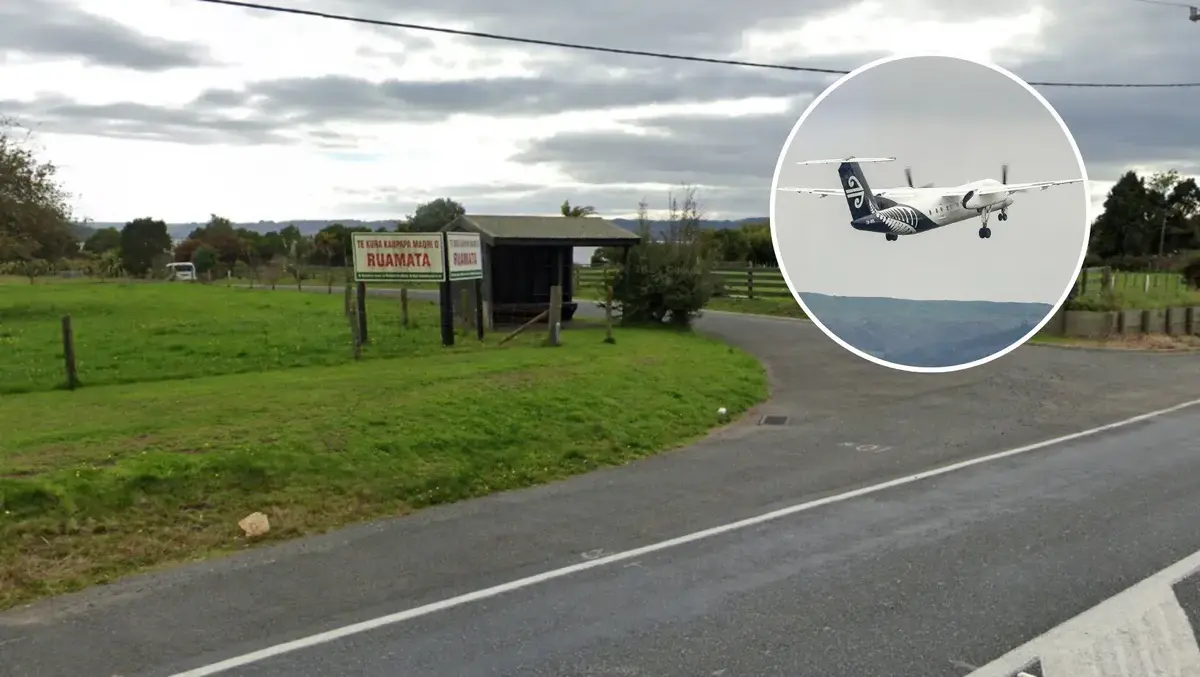
Rotorua school hits back at airport roadblock, calls on council to step in
Thu, 15th Oct 2026 (Today)
A Māori immersion school is challenging Rotorua Airport's stance on its planned expansion, arguing the airport is creating barriers to Māori education.
The dispute has intensified after leaders at Te Kura Kaupapa Māori o Ruamata criticised comments made as part of the resource consent process and called on Rotorua Lakes Council to help resolve the impasse.
The school is seeking consent to build a new multi-purpose gymnasium and relocate a teaching space to support growing demand for Māori-medium education.
Last month, the neighbouring Rotorua Airport declined to provide affected-party approval for the proposal, citing unresolved safety concerns relating to aircraft operations. The decision means the application will be assessed through an independent resource consent hearing process.
In a statement, the school's principal and founder, Dr Cathy Dewes, said the airport's position was difficult to reconcile with the school's long-standing presence beneath the flight path.
"Our kura [school] has operated here for approximately 40 years," she said.
"We have educated generations of tamariki [children], complied with requirements placed upon us and worked to ensure our learning environment is safe and appropriate."
Dewes said the airport's submission stated that in "other global jurisdictions" the school would not be granted consent to operate at its current location.
"To suggest that our kura should not be operating here at all is deeply concerning, particularly when we are simply seeking to provide the facilities our tamariki deserve," she said.
"No aviation incident or complaint" related to the school has been identified during its decades of operation, she said.
She welcomed an "independent aeronautical assessment", but argued concerns should be evidence-based and weighed against educational needs.
Dewes said the airport was developed on ancestral Ngāti Uenukukōpako land that was compulsorily acquired in the late 1950s and 1960s.
"That history matters because we are now facing opposition from an airport built on land our people were forced to give up," she said.
Dewes called on Rotorua Lakes Council, which owns the airport through a council-controlled organisation, to take an "active role" in resolving the dispute, including asking the airport to withdraw its opposition.
"We recognise the airport's importance to Rotorua," she said.
"But the airport must also recognise it operates on whenua [land] with a history and alongside a community whose rights, aspirations and wellbeing deserve equal consideration."
Airport chief executive Nicole Brewer said the airport recognised the school's role in the community but had legal obligations under health and safety and civil aviation laws to consider.
"Our initial safety assessment identified a number of unresolved safety issues relating to this and as such, the airport declined to provide affected-party approval."
She said declining to provide affected-party approval did not mean the airport opposed the development.
"It means that the decision will now go to an independent hearing, which we believe is the appropriate next step in this case."
Brewer said the airport looked forward to reviewing any aviation assessments held by the school, as well as independent assessments being commissioned by the Ministry of Education.
The council said it was not in a position to comment on the merits of submissions while the resource consent process was underway.
"Because [the] council has a statutory decision-making role, it must remain independent and cannot predetermine the outcome of the consent process or seek to influence the position of parties participating in that process," it said.
Local Democracy Reporting reported this week that councillor Te Rika Temara-Benfell questioned the airport's decision in a recent council meeting and has expressed his hope for a solution.
"The school is already there," Temara-Benfell said.
"I fail to understand how additional buildings would pose more of a health and safety risk than the buildings and classrooms already on site."
Many Māori immersion schools were under-resourced and faced strong enrolment demand.
"How do we stop being a barrier to our kura getting what they need?" Temara-Benfell said.
"Many of our kura have long waiting lists and students wanting to learn through te reo Māori."
He said the council was looking at ways it could "support the school" through the process.
The Ministry of Education and the New Zealand School Property Agency are progressing the application. An independent hearing date has yet to be set.