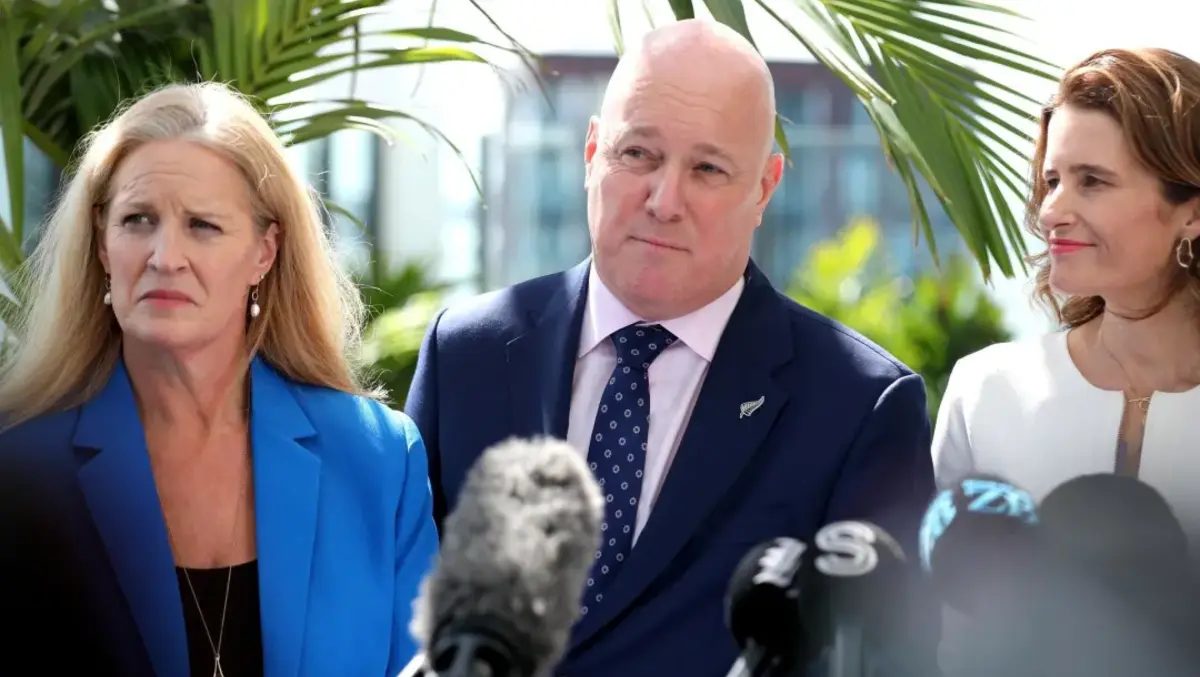
Christopher Luxon announces National's alternative to introducing bed tax
Wed, 9th Sep 2026
The National Party has announced its alternative to introducing the bed tax.
It would instead distribute money to all councils by resetting how the International Visitor Levy is allocated.
Christopher Luxon, Louise Upston and Nicola Willis announced the campaign pledge in Auckland - the country's biggest city where its mayor Wayne Brown has been highly critical of the bed tax backtrack.
National's finance spokesperson Nicola Willis says from July next year it would put $100 million into the Department of Conservation (DOC), $50m into supporting tourism growth and resilience, and the rest would go to councils based on the share of tourists they have.
In the first year it's estimated Auckland would receive $19.1m and Queenstown Lakes would be eligible for $17.1m.
Other councils would receive funding according to their share of international visitor guest nights.
"Under National's policy, every territorial authority that hosts international visitors will receive a share of IVL funding, so they can support responsible growth in tourism in their community.
"Funding would begin flowing to councils from 1 July 2027, around two years earlier than it would with a bed tax," Willis said.
National is also making clear it wouldn't increase the visitor levy for at least the next three years, which it says provides certainty to the tourism industry, she said.
With some of the levy redistributed, DOC will be short on funding over the four-year forecast period, which means the Government will be required to top it up through the operating allowance in next year's Budget.
In 2018 when the levy was first proposed under a Labour-led government, National campaigned strongly against it with then-leader Simon Bridges claiming it was "entirely unnecessary" and "just another tax".
After winning power in 2023, the following year the coalition Government nearly tripled the $35 fee to $100.
Tourism spokesperson Louise Upston said a bed tax would "disproportionately impact New Zealanders booking a weekend away, whether that's for a sports event, a family funeral or to visit friends."
"This is a clear, practical alternative to that," she said.
Under National's plan it estimates councils would be on the receiving end of an estimated $385 million over the first four years, increasing from $86 million in 2027/28 to $106 million in 2030/31 as visitor numbers grow.
Speaking to reporters on Tuesday, Upston said the reset was the party's "practical alternative" to a bed tax.
Upston said councils would be able to put this funding to practical priorities.
"We don't believe a Kiwi family booking a weekend away, or someone travelling to a family funeral should face a new tax on their accomodation.
"We already collect a levy on international visitors, and our plan puts more of that revenue into the communities welcoming them, without introducing a new tax."
Luxon said there was no dollar figure comparison of what would be raised through a bed tax, especially given no specific proposal for a bed tax was locked in, but Auckland Mayor Wayne Brown has previously said a 2.5 percent bed tax would raise $27 million.
Luxon said the amount of money in National's proposal was "significant".
He added the implementation of a bed tax would take longer, and National's proposal would put "serious, significant money" into councils pockets earlier.
Through this proposal, councils would get money devolved to them, and it was up to them to work out how they strengthen their tourism and conservation propositions in their regions.
Willis said the more tourists Auckland welcomed from overseas, the more money it would get, "that's instant cash."
The problem with a bed tax, "apart from the fact it would sting every Kiwi in the back pocket", was that it takes time to set up the legislation, collect the revenue and redistribute it, she added.
"Our proposal is quick, its instant, and no one will be paying more tax to make it work."
Willis said no one would miss out given the fund would be redistributed, explaining the government would top up DOC's funding.
She rejected the notion the proposal might compromise the books.